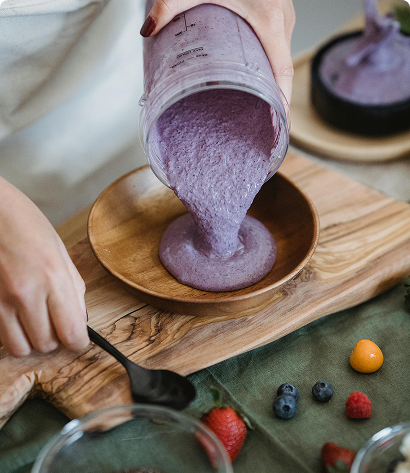
How to Make Smoothies in Any Blender: Liquid Ratios, Ingredient Order, and Timing
Smoothies don’t fail because you “need a better blender.” Most of the time, they fail because the jar never develops proper circulation: ingredients sit above the blades, frozen pieces weld into clumps, and you end up shaking the blender like it owes you money. This guide is a repeatable method you can use with almost any blender—personal cups, budget countertop models, or high-performance machines. You’ll learn a simple ratio system, the correct ingredient order, and a timing routine that prevents stalls and improves texture without turning your smoothie into flavored water.

The Core Smoothie Formula (Works in Any Blender)
If you only remember one thing, remember this: a smoothie is a controlled suspension of solids in liquid. Your job isn’t to “obliterate ingredients”—it’s to create a liquid base that pulls ingredients into the blades fast enough to break them down, while keeping the final texture thick enough to enjoy.
The easiest way to get consistent results is to build from a base ratio, then adjust by blender strength and ingredient density. Here are three reliable starting points.
- Drinkable smoothie: ~1 cup liquid + ~2 cups solids (fruit/veg/yogurt/oats combined).
- Thick smoothie: ~3/4 cup liquid + ~2 to 2.5 cups solids.
- Spoonable bowl: ~1/2 cup liquid + ~2.5 to 3 cups solids (requires a strong blender or extra technique).
“Solids” can include frozen fruit, fresh fruit, greens, yogurt, nut butter, oats, seeds, and ice. When you add more powdery or fibrous solids (protein powder, chia, oats, kale), the mix thickens rapidly. That’s not a problem—unless your blender can’t keep the mixture circulating.
How to pick your liquid (and why it changes everything)
Liquid isn’t just for taste—it’s the engine that moves ingredients through the blades. If your blender stalls, the first suspect is almost always “not enough liquid for the density of the load,” not “weak motor.” Different liquids also change how easily a smoothie blends.
- Water: easiest to blend; thins fast; best for bright fruit flavors.
- Milk or plant milk: slightly thicker; helps emulsify; good for creamy texture.
- Yogurt/kefir: thick; adds tang; often needs a bit of added water or milk to circulate.
- Juice: blends easily; can overpower; best used as part of the liquid, not all of it.
A practical rule: if your liquid is thick (yogurt-heavy, kefir-heavy), reduce solids slightly or add a “circulation splash” of water to help things start moving.
Ingredient Order: The No-Stall Stack
Ingredient order is the cheapest upgrade you’ll ever make. The goal is to keep the blades contacting liquid early, so they can create a vortex (or at least a steady churn) before frozen ingredients lock up the jar.
Use this order almost every time:
- Liquids first. Always. This protects the blades and creates immediate movement.
- Soft “wet” ingredients. Yogurt, nut butter, honey, dates, cooked oats—anything sticky or thick.
- Leafy greens. They need liquid contact to shear cleanly instead of wrapping.
- Fresh fruit and “easy” solids. Bananas, berries (fresh), softer add-ins.
- Frozen fruit / ice last. Heavy stuff goes on top so it falls into the vortex gradually.
This order matters even more in personal blenders where the cup is narrow and ingredients can wedge. Liquids first ensures the blades don’t spin in an air pocket while the frozen mass sits above them.
One exception: when seeds and powders clump
Protein powder, chia, and cocoa can form dry clumps if they’re dumped onto the surface and instantly hydrated. To reduce this, either (a) mix powder into the liquid first with a quick pulse, or (b) add the powder between two “wet” layers (for example: liquid → yogurt → powder → fruit).
Timing and Speed: A Simple 60–90 Second Routine
Most people blend too long at the wrong time. They start on high, the top freezes into a dome, the blades tunnel underneath, and they keep blending out of stubbornness. The smoother approach is staged: start the flow, break big pieces, then finish.
The standard routine (works in most blenders)
- 0–5 seconds: start low or pulse 2–3 times to pull ingredients downward.
- 5–20 seconds: blend on low-to-medium to establish circulation.
- 20–45 seconds: increase to medium/high once the mixture is moving.
- 45–90 seconds: finish high (or medium-high in weaker blenders) until texture is uniform.
If your blender only has “Low / High,” treat “Low” as the circulation stage and “High” as the finishing stage. If you have variable speed, don’t jump from 0 to max immediately—give the jar time to form movement.
The “stop rule” that prevents watery smoothies
If you have to add liquid more than once, you’re usually chasing the wrong problem. Instead of repeatedly thinning the mix, stop after 10–15 seconds of struggling and fix circulation: redistribute ingredients, scrape the sides, or pulse to break a frozen bridge. Then blend again. If the jar still can’t move, add a small amount of liquid (a few tablespoons) and restart the staged routine.
Adjusting for Your Blender Type
The same method works across blender types, but the tolerances change. A high-performance blender can muscle through thicker loads. A budget blender needs more “cooperation”: slightly more liquid, smaller pieces, and a smarter start.
Personal / single-serve blenders (narrow cups)
Narrow cups make circulation harder because ingredients stack vertically. Use these tactics to avoid stalls:
- Cut large frozen fruit. Big strawberries and mango chunks are stall magnets.
- Shake before blending. After loading, tap the cup on the counter to settle gaps.
- Use a “liquid pocket.” Make sure liquid reaches the blades—don’t let thick yogurt sit under frozen fruit without added water/milk.
- Pulse first. A few short pulses break the top bridge so the rest can fall.
If your personal blender still struggles, reduce the solids slightly or let frozen fruit sit at room temperature for 2–3 minutes. You’re not “melting it”—you’re reducing the sharp edges that lock pieces together.
Budget countertop blenders (wider jar, less torque)
These blenders can produce great smoothies, but they punish overfilling and punish thick loads. Two practical rules keep them happy: (1) don’t pack the jar to the top, and (2) don’t start with a fully frozen wall of ingredients.
- Use the drinkable or thick ratio (not bowl-thick) as your default.
- Blend greens earlier. With liquid and greens only, blend 10–15 seconds before adding frozen fruit.
- Pause once. A single stop to scrape and redistribute can save you from adding 1/2 cup extra liquid.
If you consistently want thick results from a modest blender, focus on easier thickening ingredients (banana, yogurt) rather than huge amounts of ice. Ice thickens, but it also demands torque.
High-performance blenders (strong circulation, high speed)
These blenders give you more range, not a free pass. The biggest mistake with high-performance machines is overblending until the smoothie warms and thins, especially when the goal is thick and cold.
- Shorten the finish. Once it’s smooth, stop. Heat is the enemy of thickness.
- Use fewer ice cubes. Frozen fruit thickens without as much dilution.
- Don’t jam the jar. Even strong blenders can form air pockets if the load is too dry.
Texture Control: Thick, Drinkable, or Spoonable—On Purpose
Most texture problems are just ratio problems wearing a disguise. Here’s how to steer the outcome without guesswork.
To make it thicker (without adding a mountain of ice)
- Use frozen banana. It thickens fast and blends smoother than ice.
- Add yogurt or kefir. Creamy thickness, plus better mouthfeel.
- Use oats (small amount). Start with 1 tablespoon; oats swell as they sit.
- Reduce liquid in small steps. Cut 2–3 tablespoons at a time, not half a cup.
Thickening is also timing-dependent. Many smoothies thicken after 2–4 minutes of rest as fiber hydrates. If you want a thicker final texture, blend to “almost done,” let it rest briefly, then do a short final blend.
To make it smoother (when it’s gritty or fibrous)
Smoothness isn’t only about power—it’s about how ingredients break down. Greens, seeds, and powders need more contact time and better circulation. If you keep getting grainy texture, try:
- Blend liquid + greens first for 10–15 seconds before adding frozen ingredients.
- Increase total blend time slightly (but only after circulation is established).
- Reduce dry powders or pre-mix them into the liquid to prevent clumps.
For stubborn “chunky” outcomes, the cause is usually circulation, overfilling, or frozen clumps. If that’s your recurring issue, use the dedicated troubleshooting guide: Why Smoothies Turn Chunky (and How to Fix It).
Common Problems and Fast Fixes
Problem: The blender spins, but nothing moves (a “tunnel” forms)
This happens when the blades carve a cavity while solids stay stuck above. Fix it without diluting: stop, scrape, and pulse. If the jar is overloaded, remove a portion, blend, then add it back gradually. The fastest fix is usually “less volume,” not “more liquid.”
Problem: Frozen fruit stalls the blades
Frozen clumps form bridges that block circulation. Use staged blending (pulse → low → high), and keep frozen pieces on top. If you regularly use a lot of frozen fruit and want thick results without watering down, this technique-focused article will save you time: Frozen Fruit Smoothie Technique: Preventing Stalls.
Problem: Greens taste “leafy” and the texture feels stringy
Stringy texture usually means the greens weren’t sheared properly, or you used a high-fiber green (kale) without enough blending strategy. Blend greens with liquid first, and don’t overload the jar with dry fiber. For a deeper breakdown of spinach vs kale and texture tricks, see: How to Blend Leafy Greens Smoothly.
Problem: The smoothie is watery
Watery smoothies usually come from “liquid creep”—adding extra liquid every time the blender struggles. Next time, fix circulation first. Also remember: ice melts quickly and dilutes. If you need thickness, lean on frozen fruit and banana, and keep ice minimal.
Problem: It’s foamy
Foam is trapped air. It’s common when blending at high speed with lots of liquid and not much solid resistance. Start lower, blend shorter, and avoid overfilling. Foam usually settles if you let the smoothie sit for a minute.
Two Base Smoothies You Can Memorize
These aren’t “recipes” as much as templates. Once you memorize them, you can swap ingredients freely without breaking the physics.
Template 1: The Everyday Fruit Smoothie (drinkable and smooth)
- Liquid: 1 cup water or milk
- Soft base: 1/2 cup yogurt (optional, for creaminess)
- Fruit: 1 banana (fresh or frozen) + 1 cup berries (fresh or frozen)
- Optional add-ins: 1 tablespoon nut butter or oats
Load in the no-stall order (liquid → yogurt → fruit → frozen last). Blend using the staged routine. If you want it colder without dilution, freeze the banana or use more frozen berries instead of extra ice.
Template 2: The Green Smoothie That Doesn’t Fight Your Blender
- Liquid: 1 cup water or plant milk
- Greens: 1–2 handfuls spinach (start here before kale)
- Fruit: 1 banana + 1 cup frozen mango or pineapple
- Optional: 1 tablespoon chia (add between wet layers to reduce clumps)
The key move: blend the liquid + greens first for 10–15 seconds, then add frozen fruit and finish. This prevents greens from wrapping and improves smoothness in weaker blenders.
The “One-Minute Cleanup” That Keeps Your Blender From Smelling Weird
Smoothie cleanup isn’t just convenience—it’s performance. Sticky residue increases drag, dulls the feel of the blend, and eventually creates odors that make your next smoothie taste like last week’s banana.
Do this immediately after pouring:
- Fill the jar 1/3 with warm water.
- Add a small drop of dish soap.
- Blend 10–20 seconds (low then high).
- Rinse well and leave the lid off to dry.
If your blender has a gasket or seal, avoid soaking it for long periods—standing water can trap odors. Drying with airflow (lid off) is the easiest “anti-funk” habit you can build.
If you want a simple mental checklist, here it is: liquid first, frozen last, pulse to start, blend in stages, and fix circulation before adding liquid. Do that, and most smoothies—regardless of blender—come out smoother, thicker, and far less annoying to make.