Smoothie Blenders Under $100: What Actually Handles Frozen Fruit
Here’s the truth about “budget smoothie blenders”: most of them can blend fruit. The real question is whether they can blend frozen fruit without turning your morning into a loop of stall → shake → restart → add more liquid → end up with a watery smoothie you didn’t want. This guide is built for the one problem that matters under $100: frozen fruit performance. You’ll get five picks (each in Quick Picks), plus a simple method that makes budget blenders behave better than their price suggests.


Quick Picks: Smoothie Blenders Under $100 (Frozen Fruit Focus)
Five picks, five different “budget blender realities.” Every model reviewed below is listed here so you can jump straight to the best match.
-
Best Overall Under $100: NutriBullet Pro 600
↓ Jump to Review -
Best Personal Blender for Frozen Fruit: Ninja Fit (QB3001SS)
↓ Jump to Review -
Best Full-Size Jar on a Budget: Oster Pro 1200
↓ Jump to Review -
Best “Big Batch” Value: Ninja Professional (BL610)
↓ Jump to Review -
Best Ultra-Budget Starter: Hamilton Beach Power Elite (Wave Action)
↓ Jump to Review
The $100 Line: What You Can (and Can’t) Expect
Under $100, the goal is not perfection. The goal is repeatable results. A budget blender that “sometimes” works is the one you stop using. A budget blender that works predictably is the one that becomes a habit.
Here are the three constraints most budget blenders share:
- Less torque under load: when the mix gets thick, the blades slow down and circulation collapses.
- More sensitivity to ingredient order: bad loading traps frozen fruit above the blades.
- More reliance on technique: short pulses, good ratios, and “liquid-first” matter more.
The upside: if you choose the right design and use the right approach, you can absolutely get thick, cold smoothies with frozen fruit at this price.
The “Frozen Fruit Stress Test” (Simple and Honest)
When people say a blender “can’t handle frozen fruit,” they usually mean one of these things:
- It stalls unless you add a lot of liquid.
- It leaves chunks (especially frozen berries skins and icy pieces).
- It overheats or smells hot when you push thick blends.
- It requires constant tamping, scraping, or shaking to keep moving.
The picks below aim for the best reality under $100: models that tend to start the blend reliably, keep ingredients moving, and finish with a smoother texture than typical cheap jars.
If you want the technique breakdown that prevents stalls without watering down your drink, use this guide: Frozen Fruit Smoothie Technique: Preventing Stalls Without Adding Too Much Liquid. (That’s the only informational cross-link in this article.)
A “Cheap Blender Cheat Code”: Make Frozen Fruit Behave
Here’s a simple, repeatable routine that makes budget blenders perform better: you’re not trying to brute-force frozen fruit—you’re trying to establish movement first. Frozen fruit fails when it sits above the blades like a plug.
The 60-Second Setup That Prevents Most Stalls
- Liquid first: start with enough liquid to lubricate the bottom (even if you want it thick).
- Soft binder next: banana, yogurt, or a spoon of nut butter helps the blades “grab.”
- Frozen fruit last: put frozen pieces on top so the blades can pull softer ingredients first.
- Start low, then ramp: begin gently to create circulation, then increase speed.
- Pulse to recover: if it stalls, short pulses and a quick shake beat dumping in extra liquid.
If you consistently want better results than under-$100 models can provide, the next tier is often where the “sweet spot” begins—more torque, better jars, fewer compromises: $100–$200 Smoothie Blender Sweet Spot: Value Models Worth Buying. (That’s the only commercial cross-link in this article.)
Product Reviews: 5 Budget Picks That Make Sense
You’ll notice a pattern: the best under-$100 picks are usually either strong personal blenders or value full-size jars. Choose based on your actual routine:
- Daily single-serve smoothies: personal blender workflow is faster and easier to clean.
- Family batches or shared kitchens: a full-size jar is simply more practical.
- Frozen fruit every day: prioritize circulation and torque—ignore “peak watts” marketing.
1. NutriBullet Pro 600
If you want one safe recommendation under $100, this is it. The NutriBullet Pro 600 is popular because it supports a repeatable habit: load the cup, blend, swap the lid, go. And for frozen fruit, it tends to do well as long as you use a sensible ratio and don’t try to turn the cup into a solid block of frozen ingredients.
The practical strength is consistency: it’s not the most “advanced,” but it does the daily job with fewer surprises. If you’re trying to build a routine (not collect appliances), that matters more than specs.

NutriBullet Pro 600
Best overall under $100: a routine-friendly personal blender that handles frozen fruit well with the right ratios.
- Fast daily workflow (blend + to-go cup)
- Reliable for common frozen fruit smoothies
- Minimal cleanup (few parts)
- Good “habit-building” choice
- Best results with liquid-first loading
2. Ninja Fit (QB3001SS)
The Ninja Fit is the “small but serious” pick. It’s a compact personal blender that’s often stronger than people expect, especially for its size. For frozen fruit, it usually starts blends more confidently than many ultra-cheap jars because the cup format concentrates ingredients close to the blades.
The tradeoff is capacity: it’s for personal servings, not family pitchers. But for a busy routine, that’s often a benefit. You’re not washing a big jar for one drink.

Ninja Fit (QB3001SS)
Best personal blender for frozen fruit: compact, routine-friendly, and strong enough for thick single-serve blends.
- Compact footprint for small kitchens
- Good “start-up” behavior with frozen fruit
- Great for quick single servings
- Simple to clean and store
- Works best with short pulses when thick
3. Oster Pro 1200
If you prefer a full-size jar under $100, the Oster Pro 1200 is a common “value jar blender” pick. The big advantage is flexibility: you can make multiple servings, blend sauces, and handle household use beyond smoothies.
For frozen fruit, the key is technique. Jar blenders stall when ingredients ride the walls. Start with liquid and a binder, establish movement, then add frozen fruit in stages. When you do that, you can get surprisingly smooth results for the price.

Oster Pro 1200
Best full-size jar under $100: a flexible countertop blender that can handle frozen fruit with smart loading and staging.
- Full-size jar for multi-serving smoothies
- Good value for general kitchen blending
- Frozen fruit works best with staged additions
- More versatile than personal-only systems
- A strong “one blender for the household” pick
4. Ninja Professional (BL610)
This is the “I want volume” option: large batches, frozen drinks, and a more aggressive approach to ice and frozen fruit. When it’s priced under $100, it’s one of the more compelling big-jar buys because it’s built for the kind of blending most people actually do—frozen fruit, ice, and quick household servings.
The realistic expectation: it can be very effective, but it’s not a precision “ultra-smooth greens” machine. If your priority is frozen fruit texture and big batch convenience, it fits.
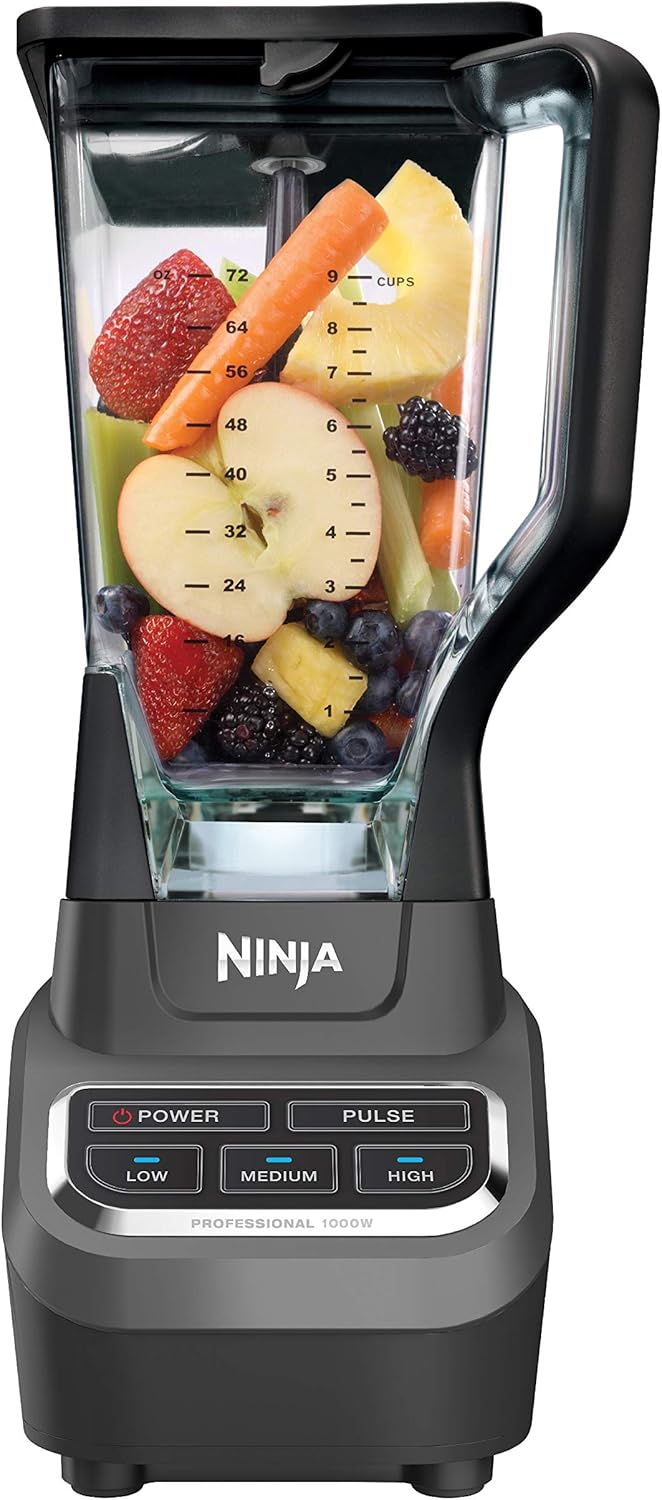
Ninja Professional (BL610)
Best big-batch value: a full-size blender that’s strong for frozen fruit and frozen drinks when priced under $100.
- Large jar for families and meal prep
- Strong frozen drink and frozen fruit performance
- Good for ice-style textures when needed
- Great fit for shared kitchens
- Best results when you avoid overfilling
5. Hamilton Beach Power Elite (Wave Action)
This is the “start somewhere” pick. If your budget is tight and you want a basic blender that can still make frozen-fruit smoothies, the Power Elite category can work—with the right expectations. You may not get the same texture polish as stronger machines, but you can still get good smoothies if you load correctly and don’t demand ultra-thick results.
The best use case is drinkable smoothies with frozen fruit, especially when you blend in stages and give the blender enough liquid to establish circulation. If you try to do ultra-thick “almost bowl” blends, this tier will punish you.

Hamilton Beach Power Elite (Wave Action)
Best ultra-budget starter: a basic blender that can handle frozen fruit smoothies with realistic thickness and good technique.
- Very budget-friendly entry point
- Works for drinkable frozen fruit smoothies
- Best when you blend in stages
- Not ideal for very thick blends
- Good starter if expectations stay realistic
How to Choose Fast (Without Regretting It)
Use this decision shortcut:
- You want the simplest routine: choose a personal blender (NutriBullet Pro 600 or Ninja Fit).
- You want family servings or batches: choose a full-size jar (Oster Pro 1200 or Ninja BL610).
- You want the lowest price that still works: choose the Hamilton Beach starter and follow the frozen-fruit technique strictly.
- You hate watery smoothies: prioritize models that start thick blends more reliably (personal blenders often win here).
Bottom Line
Under $100, the best blender is the one that fits your routine and handles frozen fruit without constant frustration. Don’t buy by “watts.” Buy by workflow (personal cup vs jar) and by stall resistance (how reliably it keeps things moving).
Pick one of the five above, use the liquid-first + frozen-last method, and you’ll get thick, cold smoothies that actually feel like a win— not a compromise.
