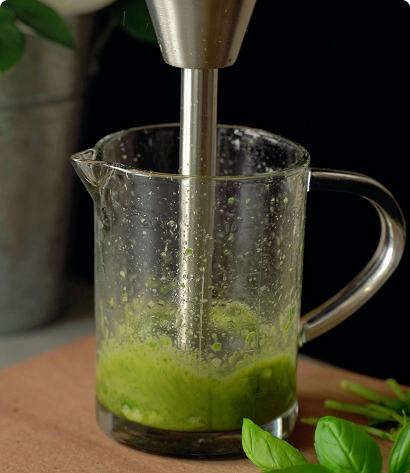
Green Smoothie Blenders Compared : Kale, Spinach, and Fiber-Heavy Performance
Green smoothies are a tougher test than most people expect. Leafy greens don’t “crush” like ice and they don’t “melt” like frozen fruit — they shred into fibers. If the blender can’t keep a strong vortex and repeatedly pull greens down into the blades, you get stringy bits, gritty pulp, and pockets of unblended leaves stuck under the lid. This guide compares blenders through one specific lens: how reliably they deliver a smooth green smoothie without constant stopping, stirring, and re-blending.


What “Good for Greens” Actually Means
Marketing loves to talk about “power,” but greens demand something more specific: circulation under load. Kale, chard stems, celery, flax, and chia can thicken a blend fast. As thickness rises, weaker designs lose the vortex, and ingredients ride the walls instead of cycling through the blades. The result is familiar: a drinkable top layer and a fibrous, half-chopped layer at the bottom.
A strong green-smoothie blender does three things consistently: (1) it pulls floating leaves down quickly, (2) it keeps a vortex even as the mixture thickens, and (3) it reduces stringy fibers so you don’t feel “grass clippings” in the mouth. You can improve outcomes with technique, but the machine’s jar shape, blade design, and torque under load set the ceiling.
Quick Picks: Green Smoothie Blenders Compared
Short on time? Every blender reviewed below appears here so you can jump straight to the model you’re considering. Labels reflect the most realistic strength for green-smoothie use: circulation, fiber reduction, and everyday convenience.
-
Best Overall (Editor’s Choice): Vitamix 5200
↓ Jump to Review -
Best for Tough Kale + Stems: Vitamix A2500 (Ascent Series)
↓ Jump to Review -
Best “Set-and-Forget” Programs: Blendtec Total Blender Classic
↓ Jump to Review -
Best Value for Smooth Greens: NutriBullet Blender Combo 1200
↓ Jump to Review -
Best for Big Batches: Vitamix E320 (Explorian)
↓ Jump to Review -
Best for Thick Green Smoothie Bowls: Ninja TWISTi (SS151)
↓ Jump to Review -
Best Quiet Premium Option: Breville Super Q
↓ Jump to Review -
Best Midrange Countertop Alternative: KitchenAid K400
↓ Jump to Review -
Best “Do-It-All” System: Ninja Foodi Power Blender Ultimate System
↓ Jump to Review -
Best Budget Full-Size for Greens: Ninja Professional Plus (BN701)
↓ Jump to Review -
Best Single-Serve for Spinach-Heavy Smoothies: NutriBullet Pro 900 (Personal)
↓ Jump to Review
How We Compare Green-Smoothie Performance
Green smoothie “smoothness” isn’t one thing. Some blenders can break down spinach quickly but leave kale fibers; others can handle kale but struggle once you add thickening ingredients like chia. The practical comparison points below explain why two blenders with similar watt numbers can feel completely different with leafy greens.
- Vortex strength (circulation): How quickly floating leaves get pulled into the blades without manual stirring.
- Fiber reduction: Whether kale/celery strands remain noticeable after a normal blend cycle.
- Thick-blend stability: Whether the vortex collapses when the mix gets dense (greens + frozen fruit + seeds).
- Scrape-down frequency: How often you need to stop and push ingredients down the walls.
- Texture control: Variable speed/pulse that lets you start slow (avoid air pockets) and finish fast (polish texture).
- Daily practicality: Noise, cleaning friction, and whether it’s easy to make one serving or multiple servings.
If you want the shortest path to silky greens, prioritize circulation first and “power” second. A blender can be loud and fast yet still leave leaf bits if the jar design doesn’t keep ingredients cycling. And if you’re shopping premium, don’t buy just for the brand name — buy for the way the jar and blade assembly behave in thick mixtures.
Technique Matters (But Only Up to a Point)
You can improve almost any blender’s green-smoothie results by controlling ingredient order and thickness: liquid first, then soft fruit/yogurt, then greens, and frozen ingredients last. Start low to establish a vortex, then ramp up once everything is moving. If you routinely fight floating leaves, you may simply be overloading greens relative to liquid volume.
For a deeper, step-by-step method (especially useful for kale and high-fiber greens), see How to Blend Leafy Greens Smoothly. Technique helps, but the right blender reduces the amount of technique you need.
When Premium Matters for Greens
If you blend greens occasionally, midrange machines can be “good enough.” But if you blend kale daily, add celery stems, use seeds, or want the closest thing to a juice-bar texture, premium models usually save time and frustration. That’s why the best green-smoothie machines tend to overlap with the broader “high performance” tier (strong torque, stable vortex, and better fiber reduction). If you’re unsure whether to step up, this deeper breakdown may help: High-Performance Smoothie Blenders.
Green Smoothie Blender Reviews
Below are 11 options across performance tiers. None of them are perfect for every person — the “best” blender depends on how much kale you use, whether you blend one serving or four, and how much friction you can tolerate in cleaning and noise.
1. Vitamix 5200
If you want one blender that repeatedly delivers smooth green texture with minimal babysitting, this is a dependable baseline. The strong vortex behavior is the main reason it works so well for leafy greens: spinach disappears quickly, and kale fibers are reduced more than most midrange models can manage in the same amount of time.
It’s also forgiving. Even if your ratio is slightly too thick, it tends to keep ingredients cycling instead of instantly forming a “stuck ring” of greens on the wall. For daily green smoothie drinkers, that consistency matters more than fancy presets.

Vitamix 5200
Best overall balance for greens: strong circulation, fewer leaf bits, and reliable texture even with thicker mixes.
- Excellent vortex behavior for leafy greens
- Strong fiber reduction for kale-heavy blends
- Variable speed helps avoid air pockets
- Works well for single servings and batches
- Simple controls, easy daily routine
2. Vitamix A2500 (Ascent Series)
A strong step-up pick for fiber-heavy green smoothies. The A2500’s main advantage is dependable circulation in thicker blends — it keeps leafy greens moving through the blades instead of letting them float and cling to the jar walls. That matters when you use kale, chard, celery, or add seeds that quickly increase viscosity.
If your daily routine includes tough greens and you want fewer “stop-and-scrape” moments, A2500 is a practical Ascent-series choice. Just note: refurbished listings can be excellent value, but availability and kit contents may vary.

Vitamix A2500 (Ascent Series)
Built for tougher greens: reliable circulation for kale, stems, and thicker mixes with fewer re-blends.
- Strong vortex performance for leafy greens
- Better stability as blends get thicker
- Great fit for kale + celery + seed add-ins
- More consistent texture with fewer stops
- Refurb options can offer strong value
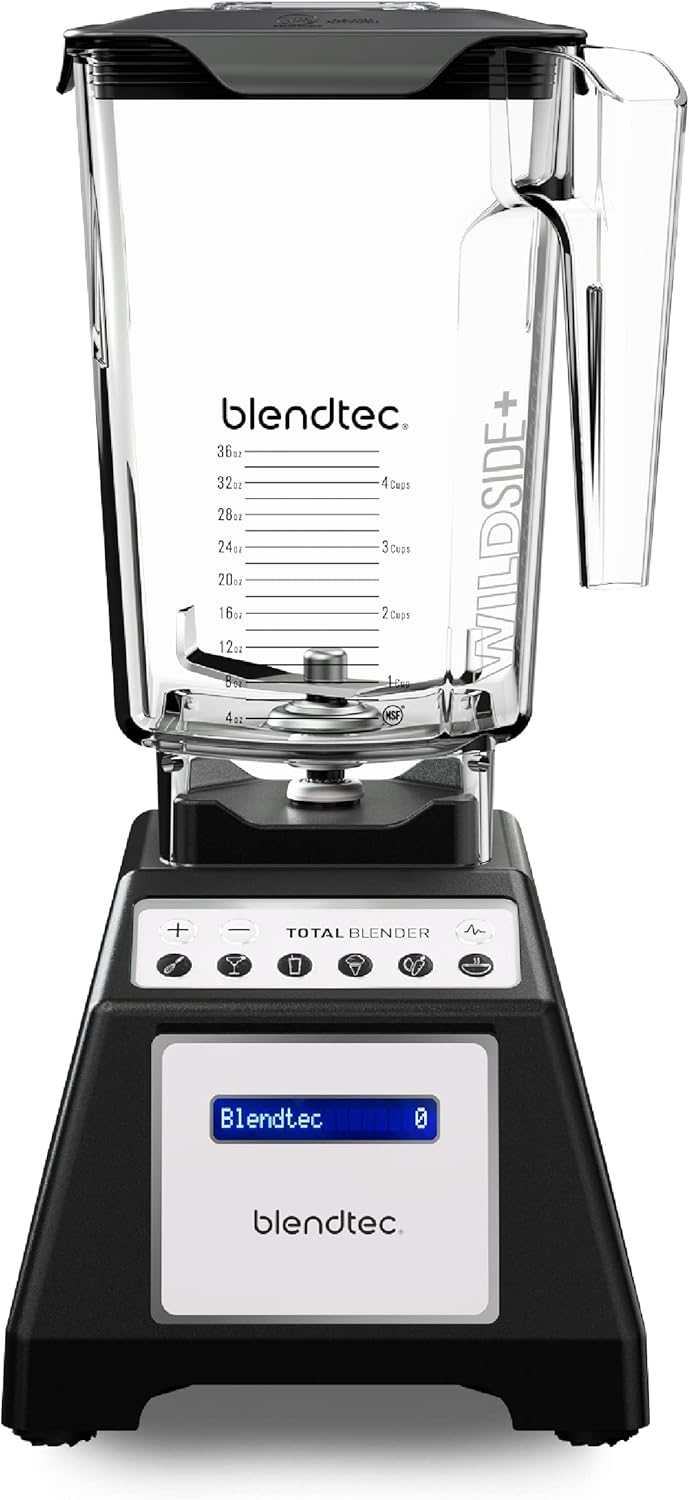
3. Blendtec Total Blender Classic
A strong “set-and-forget” choice if you prefer using programmed cycles rather than riding a variable-speed dial. For green smoothies, longer automated blends can help finish texture — especially when spinach is combined with frozen fruit and the mixture needs extra time to polish out small leaf fragments.
The key is keeping a drinkable ratio so the blend keeps circulating. If you push into ultra-thick bowl territory, you may still need to stop and scrape. But for everyday green smoothies, the programmed approach is practical and repeatable.
Blendtec Total Blender Classic
Best “set-and-forget” option: programmed blending that helps finish green smoothie texture with minimal manual control.
- Convenient preset-style blending cycles
- Great for consistent, repeatable routines
- Strong finish/polish on drinkable greens
- Less hands-on than manual variable-speed blending
- Works best with sensible liquid ratios
4. NutriBullet Blender Combo 1200
If you want noticeably better green-smoothie texture than entry-level blenders — without jumping into the premium price tier — this is a practical middle ground. It won’t match the fiber reduction of top-tier machines on heavy kale, but it can produce smooth spinach blends and respectable kale blends when ratios are sensible.
The main reason it fits a “value” slot is flexibility: you can make a single-serve green smoothie in a cup, or use a full jar for multiple servings. For many kitchens, that’s the difference between using a blender daily and letting it collect dust.

NutriBullet Blender Combo 1200
Best value option for greens: good everyday texture for spinach and mixed greens, and workable results for kale when you don’t overload fiber.
- Great value-to-performance for green smoothies
- Single-serve and full-jar flexibility
- Good texture with spinach and softer greens
- Works best with reasonable liquid ratio for kale
- Convenient daily cleanup for many users
5. Vitamix E320 (Explorian)
A practical pick for bigger batches without jumping into the highest price tier. The E320’s advantage for green smoothies is volume + circulation: with a full-size jar and strong blending behavior, it’s easier to keep greens cycling when you’re making multiple servings at once or prepping for later.
It’s a strong match for families and meal prep. For thick blends, start with liquid and build a vortex before adding frozen ingredients — that’s where you get the smoothest texture with fewer “dead zones.”

Vitamix E320 (Explorian)
Best for big batches: strong circulation in a full-size jar for family-sized green smoothies and meal prep.
- Full-size capacity for multi-serving blends
- Strong circulation for leafy greens at volume
- Good consistency for meal prep routines
- Less frequent stopping in larger blends
- Solid value in the Vitamix ecosystem
6. Ninja TWISTi (SS151)
Thick green smoothie bowls are a different game: circulation collapses fast, and many blenders just spin air on top. The TWISTi approach is designed for dense blends — it’s a practical pick if you routinely make spoonable mixes with greens, frozen fruit, nut butters, or seeds, and you want fewer stalls.
It’s still important to be realistic: ultra-thick bowls may require short bursts and occasional redistribution. But for the price tier, this is one of the more targeted options for thick “bowl-style” blending.

Ninja TWISTi (SS151)
Best for thick green smoothie bowls: designed to handle dense blends where many blenders lose circulation.
- Better behavior in thick, spoonable mixes
- Good fit for green bowls with frozen fruit
- Helps reduce stalling vs typical budget blenders
- Works well with seeds and nut-butter thickness
- Strong value for bowl-focused routines
7. Breville Super Q
Many people want smoother greens but don’t want a blender that dominates the kitchen with noise. The Super Q class targets that problem: strong performance with a more “appliance-like” user experience and a premium finish. For green smoothies, it can be a good match if you blend often but value a quieter, more polished routine.
The real question is priority. If maximum fiber reduction is the only goal, some other models may deliver more per dollar. But if you blend early mornings in an apartment, or you simply hate loud machines, a quieter premium option can be the reason you actually use it daily.

Breville Super Q
A premium, more refined blender experience for green smoothies: strong performance with a quieter, smoother daily routine.
- Better “quiet” experience than many power blenders
- Strong performance for spinach and mixed greens
- Good for daily routines and frequent use
- Convenient controls for repeatable texture
- Premium build and feel
8. KitchenAid K400
This is a realistic midrange countertop option for people who want decent green-smoothie performance without paying premium pricing. It generally does best when your greens are mostly spinach or softer leafy mixes, and when you keep ratios drinkable.
The limit shows up with heavy kale and fibrous add-ins. You can still get good results, but you may need longer blending, more liquid, or an occasional stop-and-scrape. If you’re coming from an entry-level blender, it’s a meaningful upgrade. If you’re chasing juice-bar smoothness, it’s not the ceiling.

KitchenAid K400
A solid midrange blender for everyday green smoothies: best with spinach and mixed greens, and workable for kale when you keep ratios reasonable.
- Good everyday performance for spinach-based greens
- Midrange price with respectable texture
- May need longer blend time for fibrous kale
- Better results with drinkable ratios
- A sensible upgrade from entry-level machines
9. Ninja Foodi Power Blender Ultimate System
“System” blenders are popular because they promise one machine for everything: smoothies, bowls, chopping, and more. For green smoothies, the upside is convenience — you can blend a single serving quickly, then swap to a larger container when needed.
The tradeoff is that system designs often focus on versatility rather than maximum fiber reduction. Spinach-heavy blends are usually fine; tough kale blends may still retain some texture unless you blend longer and keep adequate liquid. If your priority is “one appliance for many tasks,” it’s a practical choice. If your priority is the smoothest greens possible, a dedicated high-performance countertop model is typically stronger.

Ninja Foodi Power Blender Ultimate System
A versatile system for people who want green smoothies plus multiple kitchen tasks. Best with drinkable greens and realistic expectations on kale fiber.
- Convenient multi-container, multi-use setup
- Good for spinach and mixed greens
- Works for smoothies + bowls + other tasks
- Kale may need longer blending and enough liquid
- Strong “one machine” practicality
10. Ninja Professional Plus (BN701)
This is a common budget pick because it provides a lot of perceived power for the price. For green smoothies, it can work — especially for spinach-based blends — but it’s less consistent when you push into fibrous territory (kale + stems + seeds + thick frozen mixes).
If you buy this tier, the realistic goal is “good enough texture most days,” not “juice-bar smooth.” Use more liquid, blend a bit longer, and avoid overstuffing greens. That will reduce the common failures: leaf bits under the lid and a fibrous bottom layer.

Ninja Professional Plus (BN701)
A budget full-size option that can do green smoothies, best with spinach and drinkable mixes. Kale needs patience and a sensible ratio.
- Strong value for a full-size blender
- Good for spinach and softer green mixes
- Kale may remain slightly fibrous
- Best results with adequate liquid and longer blends
- Not ideal for ultra-smooth “juice bar” texture
11. NutriBullet Pro 900 (Personal)
Personal blenders can be surprisingly effective for green smoothies if you keep expectations realistic. The Pro 900 style works best when your greens are mostly spinach or tender greens, and when you include enough liquid to maintain movement in a narrow cup.
The biggest limitation is fiber density. If you pack a lot of kale, you’re likely to get more texture than you want. But if your goal is a fast, daily spinach smoothie with minimal cleanup, a personal blender can be the most practical choice — because it’s easy enough to actually use every day.

NutriBullet Pro 900 (Personal)
Best single-serve option for spinach-heavy green smoothies: quick, minimal cleanup, and solid texture when you don’t overload fibrous greens.
- Fast single-serve green smoothies
- Great for spinach and tender greens
- Minimal cleanup encourages daily use
- Not ideal for heavy kale + stems blends
- Best results with enough liquid for circulation
Bottom Line: Which One Should You Buy?
If you want the smoothest green smoothies with the least effort, prioritize a blender that maintains a strong vortex under load and reduces fiber effectively. That’s why the top-tier options keep showing up for kale-heavy routines: they produce fewer “bad blends,” and they require less trial-and-error.
If you mostly blend spinach and soft fruit, you can spend less and still get a good daily smoothie. The key is being honest about your recipes: kale stems, celery, seeds, and thick frozen mixes are what expose weak circulation and leave texture behind.