Thick Smoothie Bowl Blenders: Spoonable Results With Minimal Liquid
A “thick smoothie bowl” is not just a smoothie in a bowl. It’s a different job. You’re asking a blender to move a near-frozen mass with minimal liquid, without stalling, without cooking it from friction, and without leaving hidden ice chunks that ruin the spoon test.


This guide is built around one goal: spoonable results with minimal liquid. That means we prioritize blenders that maintain circulation under heavy load, especially models with tampers or thick-blend systems. If you want a bowl that holds its shape (not a drinkable smoothie), start here.
Quick Picks: Thick Smoothie Bowl Blenders
All 5 models are reviewed below. Pick by how you blend: dedicated bowl systems, tamper-style thick blends, or fast single-serve routines.
-
Best Overall Spoonable Bowls: Ninja TWISTi (SS151)
↓ Jump to Review -
Best Dedicated Smoothie Bowl System: Ninja Smoothie Bowl Maker (SS101)
↓ Jump to Review -
Best Affordable Single-Serve Bowls: NutriBullet Pro+ (Personal Blender)
↓ Jump to Review -
Best Premium Texture + Multi-Use: Vitamix E320 (Explorian)
↓ Jump to Review -
Best High-End Convenience: Breville Super Q
↓ Jump to Review
The “Bowl Problem”: Why Thick Blends Break Most Blenders
Thick smoothie bowls fail in three predictable ways:
- Air pocket (the “tornado lie”): the blade spins, but the frozen mass rides the walls and never drops into the blades.
- Stall and overheat: the motor bogs down, you keep restarting, and the base heats up without actually improving texture.
- Liquid creep: you add more and more liquid to “save” the blend, and you end up with drinkable soup instead of a bowl.
The best bowl blenders solve circulation under load. That usually means one of two designs: a tamper/thick-blend workflow (you control the ingredients and feed them down) or a dedicated bowl system that’s built specifically for dense blends.
Fast Technique: The Spoon Test Workflow (Minimal Liquid, No Regrets)
Before you buy anything, this matters: even the best blender can make a bad bowl if the load order is wrong. Here’s the practical workflow used to keep bowls thick without stalls:
- Start with less liquid than you think (just enough to wet the bottom).
- Add “soft anchors” next: banana, yogurt, or nut butter helps the frozen fruit circulate.
- Frozen goes last and goes in layers—don’t dump a full block of frozen fruit at once.
- Pulse first, then blend once you see movement. If you don’t see movement, stop early and correct the load.
- Stop as soon as it’s smooth. Over-blending warms the mix and makes bowls collapse.
If thick frozen fruit keeps stalling your blender, read this one technique guide (the only informational link in this article): Frozen Fruit Smoothie Technique: Preventing Stalls Without Adding Too Much Liquid.
And if you’re deciding whether to jump to a truly premium motor class for dense blends, here’s the single commercial cross-link (only if you want the “why premium pays off” breakdown): High-Performance Smoothie Blenders: When Premium Power Really Pays Off.
Reviews: 5 Blenders That Can Make Real Smoothie Bowls
These picks are chosen for one thing: they can handle thick blends without forcing you to drown the recipe in liquid. Each one is included in Quick Picks above.
1. Ninja TWISTi (SS151)
The fastest way to get spoonable bowls at home—without learning a “perfect blender technique”—is a model that supports thick blending by design. The TWISTi style approach gives you a built-in workflow for dense mixes: instead of hoping for a vortex, you guide the blend until circulation locks in.
The main value is consistency. Thick bowls are usually a “circulation problem,” not a “recipe problem.” A blender that can maintain movement under load reduces stalls, reduces re-blends, and makes your bowl routine repeatable. If you want one blender mainly for smoothie bowls, this is a strong first stop.

Ninja TWISTi (SS151)
Best overall spoonable bowls: built for dense blends, helps maintain circulation without forcing you to add extra liquid.
- Designed to handle thicker blends without constant stalling
- Better circulation control than typical “mini blenders”
- Great for frozen fruit bowl routines
- Reduces the need to “save” the blend with extra liquid
- Strong all-around choice for daily smoothie bowls
2. Ninja Smoothie Bowl Maker (SS101)
This is the “I want bowls, not a hobby” pick. Dedicated bowl systems can be surprisingly effective because they’re optimized for one job: small, thick, frozen blends. That specialization matters when your goal is spoonable texture with minimal liquid.
The tradeoff is capacity and flexibility. You don’t buy this for big family batches or hot soups. You buy it for a reliable bowl routine: frozen fruit + a small binder + controlled blending = thick results. If bowls are the priority and you want a compact counter workflow, this category fits.

Ninja Smoothie Bowl Maker (SS101)
Best dedicated smoothie bowl system: portion-friendly thick blends that hold shape without turning into a drink.
- Optimized for dense, spoonable smoothie bowls
- Works best with small, controlled batches
- Great for frozen fruit + minimal liquid recipes
- Compact workflow for daily bowl routines
- Ideal if bowls are your primary goal
3. NutriBullet Pro+ (Personal Blender)
The simplest “thick bowl hack” is a powerful personal blender with a tight cup geometry. In many kitchens, cups do better than small jars because the ingredients have less room to float away from the blade path. That can make thick blends easier than you’d expect—if you load correctly.
The honest limitation: ultra-thick bowls are still harder in a personal cup than in a tamper workflow. But for many people, this is the best cost-to-results option: it’s fast, it stores easily, and you can make thick-ish bowls with minimal liquid when you use a binder (banana/yogurt/nut butter) and add frozen fruit in layers.
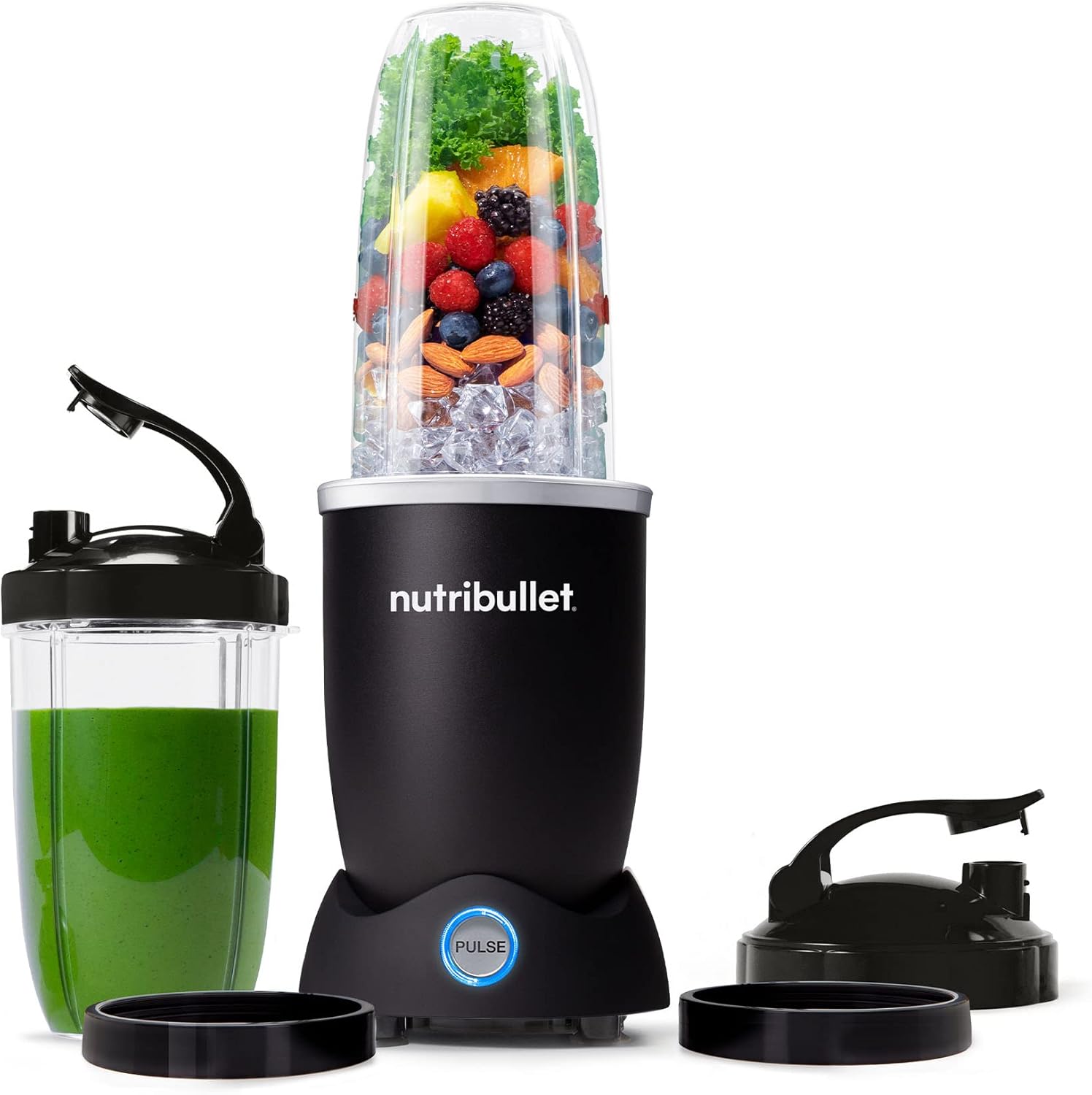
NutriBullet Pro+ (Personal Blender)
Best affordable single-serve bowls: compact, fast, and capable of thick blends when you load ingredients correctly.
- Tight cup geometry helps circulation
- Great for single-serve bowl portions
- Compact storage and quick cleanup
- Works well with frozen fruit + a “binder” ingredient
- Strong value pick for daily routines
4. Vitamix E320 (Explorian)
If you want thick bowls that feel “restaurant smooth,” premium power and a proven thick-blend workflow matter. This type of blender is not compact, not cheap, and not silent—but it can deliver a specific advantage: very consistent texture with less frustration when you run dense recipes.
The real benefit for bowls is control. With a thick blend, your goal is to create movement quickly, then stop as soon as the texture is finished. A strong motor platform helps you reach that “movement lock-in” phase faster so you’re not heating the bowl by grinding it for a long time. If you also want a blender for soups, sauces, and general kitchen work, this kind of model justifies itself.

Vitamix E320 (Explorian)
Best premium texture + multi-use: strong circulation and consistent results for thick bowls, smoothies, and broader kitchen blending.
- Excellent texture consistency for frozen blends
- Handles thick recipes with fewer stalls
- Faster “movement lock-in” for dense bowls
- Versatile: smoothies, sauces, soups, and more
- Best for long-term daily blending households
5. Breville Super Q
This is the high-end “make it easy” option: premium build, strong blending performance, and a workflow that feels more guided. For smoothie bowls, what you’re paying for is not just power—it’s convenience under stress. Thick blends are where cheap blenders become annoying, and “annoying” is how routines die.
The honest reality: it’s still a big blender. If you want a small machine only for bowls, the dedicated bowl systems make more sense. But if you want a premium blender that can do thick bowls, smoothies, and general kitchen blending—with fewer rough edges—this class fits.
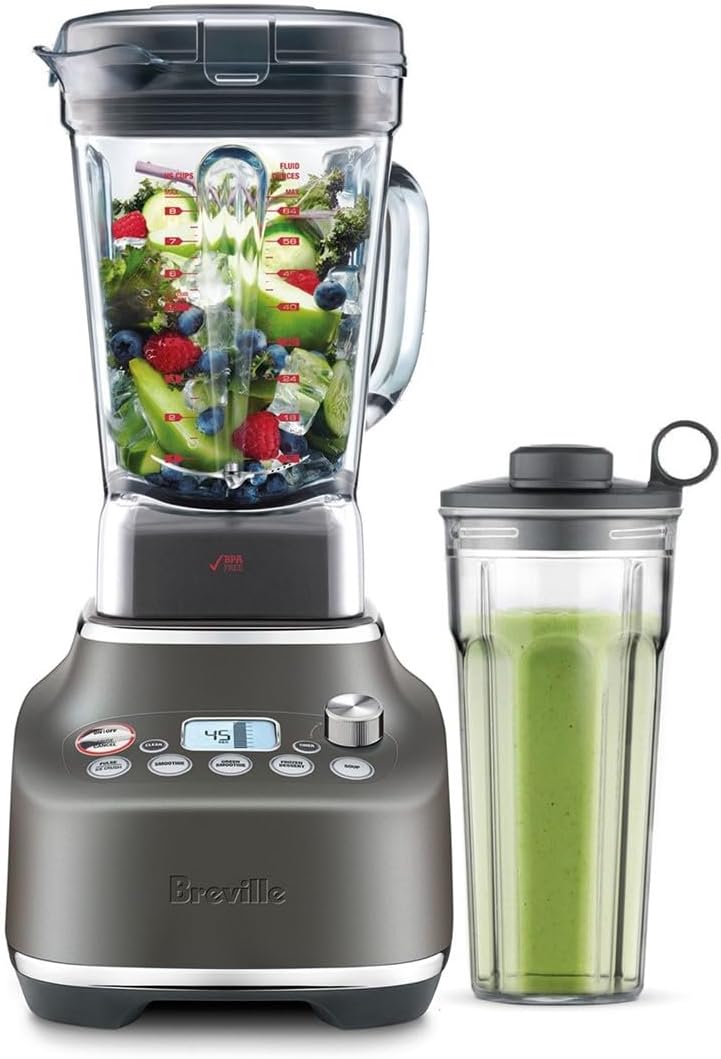
Breville Super Q
Best high-end convenience: premium feel and consistent thick blending for smoothie bowls and broader kitchen use.
- Premium build and strong blend consistency
- Handles thick blends more predictably than budget models
- Good “routine blender” for bowls + smoothies
- Better fit when you want one premium kitchen blender
- Best for users who value convenience and repeatability
How to Keep Bowls Thick Without Destroying Your Blender
Thick bowls are where people accidentally abuse their blender. Use these rules to keep results thick while reducing stress on the motor:
- Don’t start “dry.” Minimal liquid is fine. Zero liquid often creates a stall + overheat loop.
- Use a binder ingredient. Banana, yogurt, or nut butter helps frozen fruit move.
- Use short bursts. Pulse to break the initial block, then blend once movement begins.
- Stop early and fix the load. If nothing is moving, continuing is how you overheat the base.
- Serve immediately. Bowls melt faster than you think, especially after heavy blending.
Bottom Line
Spoonable smoothie bowls are a circulation challenge. If you want thick results with minimal liquid, you need either a blender that supports thick blending by design (tamper/thick-blend workflow) or a dedicated bowl system built for dense mixes.
For most people: start with the Ninja TWISTi style category for consistent thick bowls, choose a dedicated bowl system if bowls are your main goal, or upgrade to premium power if you want the smoothest texture plus a true all-purpose kitchen blender.
